
Dental Care Tips for People with Braces: What You Should Know
Learning how to clean teeth with braces properly takes a little practice, but a consistent routine can help you avoid cavities, gum irritation, and staining during orthodontic treatment. Brackets and wires create extra places for food particles and plaque to collect, making daily brushing and flossing especially important.
With the right tools and habits, you can keep your teeth and gums healthy while working toward a straighter smile. These practical tips can help you build a routine that works throughout treatment.
Master the Art of Brushing with Braces
One of the most important oral hygiene tips for people with braces is to spend enough time cleaning around every bracket and wire. Rushing through brushing can leave plaque behind, particularly near the gumline and between teeth.
Brush Thoroughly After Meals
Brush at least twice daily with fluoride toothpaste and clean your teeth after meals when possible. Use a soft-bristled toothbrush, angling it toward the gumline and then toward the brackets to reach areas above and below the wires. Small, gentle circular movements can help remove plaque without irritating your gums.
An electric toothbrush may make cleaning easier, although a manual brush can work well when used carefully. Pay particular attention to the backs of your teeth and the chewing surfaces of your molars. If you can’t brush after eating, rinse your mouth with water and brush when you have the opportunity.
Clean Between Teeth & Around Wires
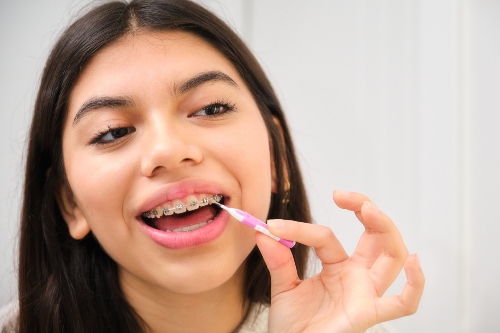
A toothbrush alone may not remove everything trapped around orthodontic hardware. Interdental brushes, floss threaders, and orthodontic floss can help you reach tight spaces and clean around wires.
Water flossers can also be useful for flushing away loose food particles, but they shouldn’t automatically replace traditional flossing. Choose tools that fit comfortably and ask your dental team to demonstrate the best technique if you’re unsure.
Build the Best Dental Care Routine with Braces
A dependable daily routine doesn’t have to be complicated. Consistency matters more than buying every available dental product.
- Morning: Brush with fluoride toothpaste and check around brackets for any remaining debris.
- After Meals: Rinse with water or brush, when possible, especially after eating foods that stick to braces.
- Evening: Brush carefully, clean between teeth, and inspect your mouth before bed.
- Regular Checkups: Keep dental cleanings and orthodontic appointments to monitor your teeth, gums, and appliances.
Fluoride mouthwash may provide additional protection against cavities when appropriate, but it doesn’t replace brushing and flossing. If your dentist recommends a specific product, follow the directions for use.
Common Braces Problems & How to Handle Them
Even with good care, braces can cause occasional discomfort or make certain foods harder to eat. Knowing how to respond can help you stay comfortable without damaging your appliances.
Foods to Avoid with Braces
Choosing the right foods is an important part of braces care tips for healthy teeth. Hard, sticky, and chewy foods can bend wires, loosen brackets, or become difficult to remove. Avoid items such as hard candy, chewing gum, popcorn kernels, ice, and very sticky sweets.
You don’t have to give up every crunchy food. Cut firm fruits and vegetables, such as apples and carrots, into small pieces rather than biting directly into them. Choose softer options when your teeth feel tender after an adjustment, and limit sugary snacks that can contribute to plague buildup.
Preventing Cavities Around Brackets
Knowing how to prevent cavities with braces is especially important because plaque can collect around brackets and leave white marks on enamel when treatment ends. These spots may be signs of early enamel damage and can sometimes remain visible after braces are removed.
Brush thoroughly with fluoride toothpaste, clean between your teeth every day, and limit frequent sugary drinks and snacks. Water is generally a better everyday choice than soda or sweetened beverages. Keep up with professional cleaning and ask your dentist whether additional fluoride protection would be useful based on your cavity risk.
Managing Soreness & Irritation
Mild soreness after braces is first placed or adjusted is common. Softer foods can make eating more comfortable while your mouth adapts. Orthodontic wax may also help cover a bracket or wire that rubs against the inside of your cheek or lip.
If a wire becomes loose or starts poking you, contact your orthodontic office for instructions. Don’t cut or forcefully bend the appliance yourself unless your orthodontic team specifically directs you to take a particular step. Severe pain, swelling, or an injury to your mouth warrants prompt professional advice.
Signs You Need Professional Attention
Some problems shouldn’t wait until your next scheduled appointment. Contact your dentist or orthodontist if you notice persistent gum bleeding, increasing tooth sensitivity, visible white spots, a loose bracket, or a broken wire. These issues may need attention to prevent further damage or disruption to treatment.
You should also seek advice if brushing or flossing causes ongoing discomfort that makes it difficult to maintain your routine. Your dental team can check for inflammation, demonstrate more comfortable cleaning techniques, and recommend suitable products. If you develop facial swelling, fever, or severe pain, seek prompt dental care.
At Hawthorn Dental St. Charles, we want to help you protect your teeth and gums throughout orthodontic treatment. If you’re in Homewood, IL, and need guidance on oral hygiene, cavity prevention, or concerns that arise while wearing braces, contact our team to request an appointment. We’ll help you understand the steps you can take to maintain a healthy smile.
Frequently Asked Questions
Braces require extra attention, but small adjustments to your daily routine can make a meaningful difference. Here are answers to common questions about keeping your teeth clean and healthy during orthodontic treatment.
Brush at least twice a day, ideally after meals when possible. Take your time cleaning around brackets, wires, and the gumline, and floss or clean between your teeth daily.
Yes. An electric toothbrush can help remove plaque around orthodontic hardware when used correctly. Choose a soft-bristled brush and follow your dentist’s or orthodontist’s cleaning recommendations.
Avoid hard, sticky, and chewy foods that can damage brackets or wires, including hard candy, gum, ice, and popcorn kernels. Cut firm fruits and vegetables into smaller pieces to make them easier to chew.
Brush thoroughly with fluoride toothpaste, clean between your teeth daily, and reduce frequent sugary snacks and drinks. Regular dental visits can also help identify early signs of enamel damage.
Yes. Continue routine dental checkups and professional cleanings while attending your orthodontic appointments. Your dentist can monitor your teeth and gums for cavities, inflammation, and other problems that may develop during treatment.